Focal, filler, line and gesture — inside the quiet grammar our florists use to compose a bouquet that feels inevitable.
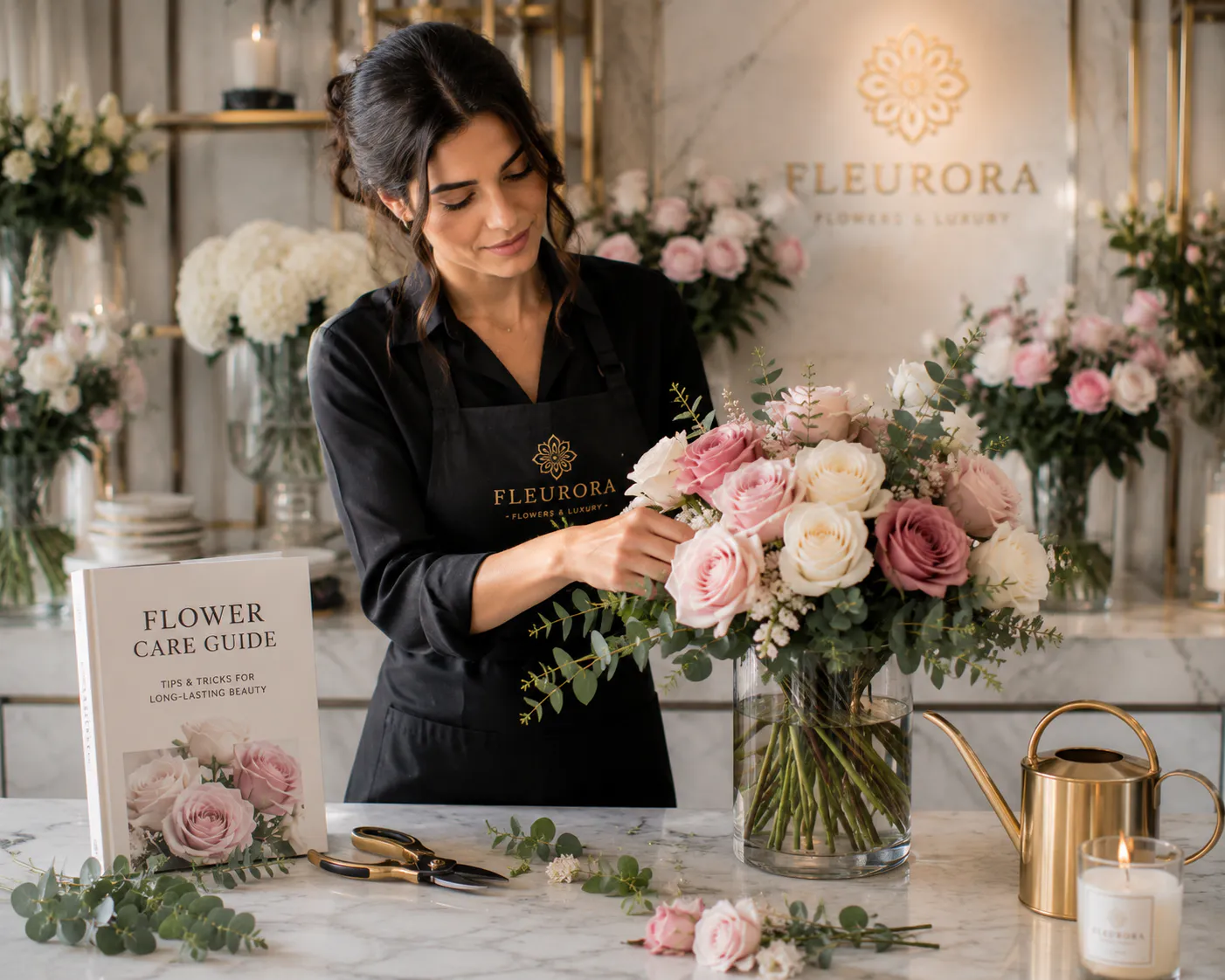
Watch a master florist work and you will notice something odd: they barely seem to decide anything. Stems move from bench to hand in a continuous motion, the bouquet turning slowly like a planet, and four minutes later something finished exists. The decisions are there — they have simply been rehearsed for years.
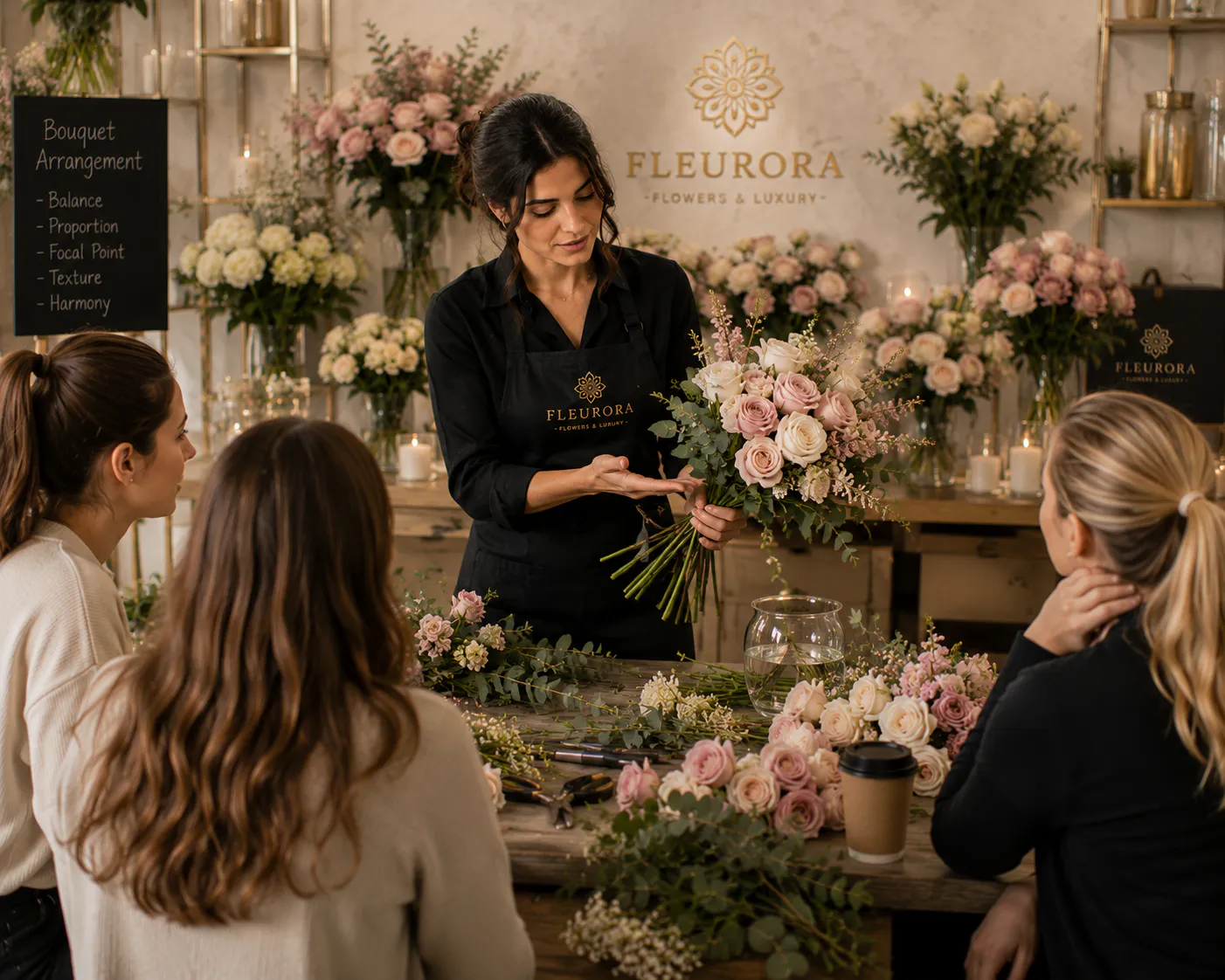
Underneath the fluency is a grammar. We teach it to every florist who joins the atelier, and it is worth knowing even if you only ever arrange flowers for your own kitchen table.
The Four Roles
Every stem in a composition plays one of four roles. Focal flowers — the peonies, the garden roses — carry the emotion and take the eye first. Filler builds the body and sets the palette's undertone. Line flowers — delphinium, snapdragon, branches — give the bouquet its silhouette and reach. And gesture stems, the grasses and vines that extend past the edges, make an arrangement look alive rather than assembled.
A bouquet that feels flat is almost always missing a role — usually line or gesture. A bouquet that feels chaotic usually has too many focals fighting for the lead.
The Spiral
Signature bouquets are built in a spiral: every stem laid across the last at the same slight angle, the whole bundle turning in the hand as it grows. The spiral is why a hand-tied bouquet stands open and relaxed in a vase instead of clumping — each stem has its own airspace, held by geometry rather than force.
The Rule of Odd and the Rule of One
Focal flowers go in odd numbers — three, five, seven — because even numbers pair off and become symmetrical, and symmetry reads as formal rather than romantic. And every composition needs exactly one moment of surprise: the single dark scabiosa in a blush bouquet, one stem of jasmine escaping the edge. One. More than that and surprise becomes noise.
The last step in our atelier is always the same: the bouquet is set in water, the florist steps back three paces, and looks at it the way you will — from across a room, in ordinary light. If it still feels inevitable from there, it is finished.

written by
Camille Laurent
Creative Director · FLEURORA Atelier